
Country-cow formulations
Organic Manure
Traditional country-cow inputs developed into liquid fertilizers, crop-support formulations and useful organic products.

One of ten principal business divisions
Public status · 5 Oct 2026
Not publicly verifiedProduct information is presented on this site; facility location, production capacity and registrations have not yet been published here. Corporate information
A natural production system
JBE supplies organic fertilizer based on country-cow inputs, bringing traditional cultivation knowledge into structured production and distribution.
Basic ingredients
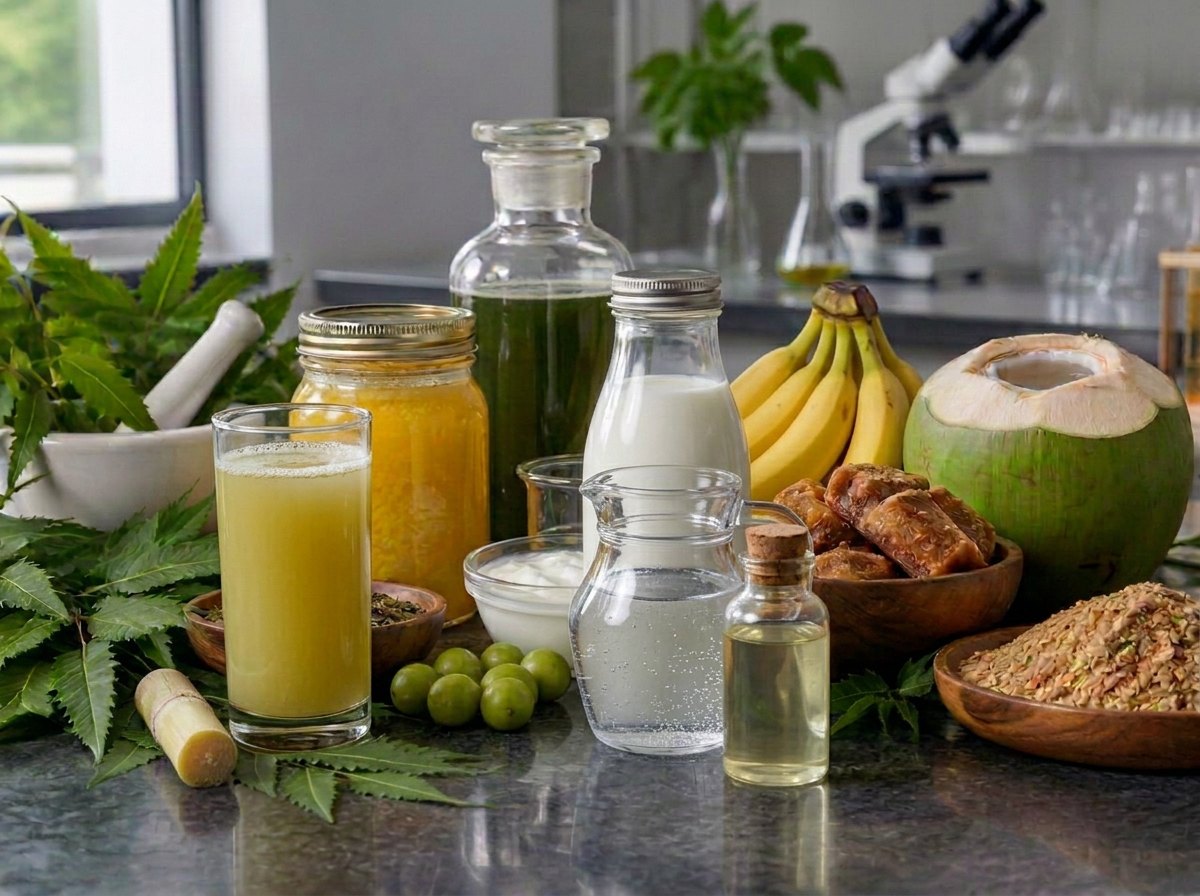
The formulations are built from a set of natural inputs — country-cow milk, curd and desi cow ghee, cow urine, tender coconut, well-ripened Poovan bananas, jaggery, sugarcane juice, water and neem — brought together under controlled conditions.
Product range
- Amruthrasaa liquid organic fertilizer
- Organic aquaculture feed supplement
- Urvarasaa plant-based pest-repellent formulation
- Organic cleaner liquid
- Country-cow dung cakes
- Cow dung powder
- Distilled country-cow urine for agricultural and manufacturing applications
- LFOM: Liquid Fermented Organic Manure
Cow dung powder
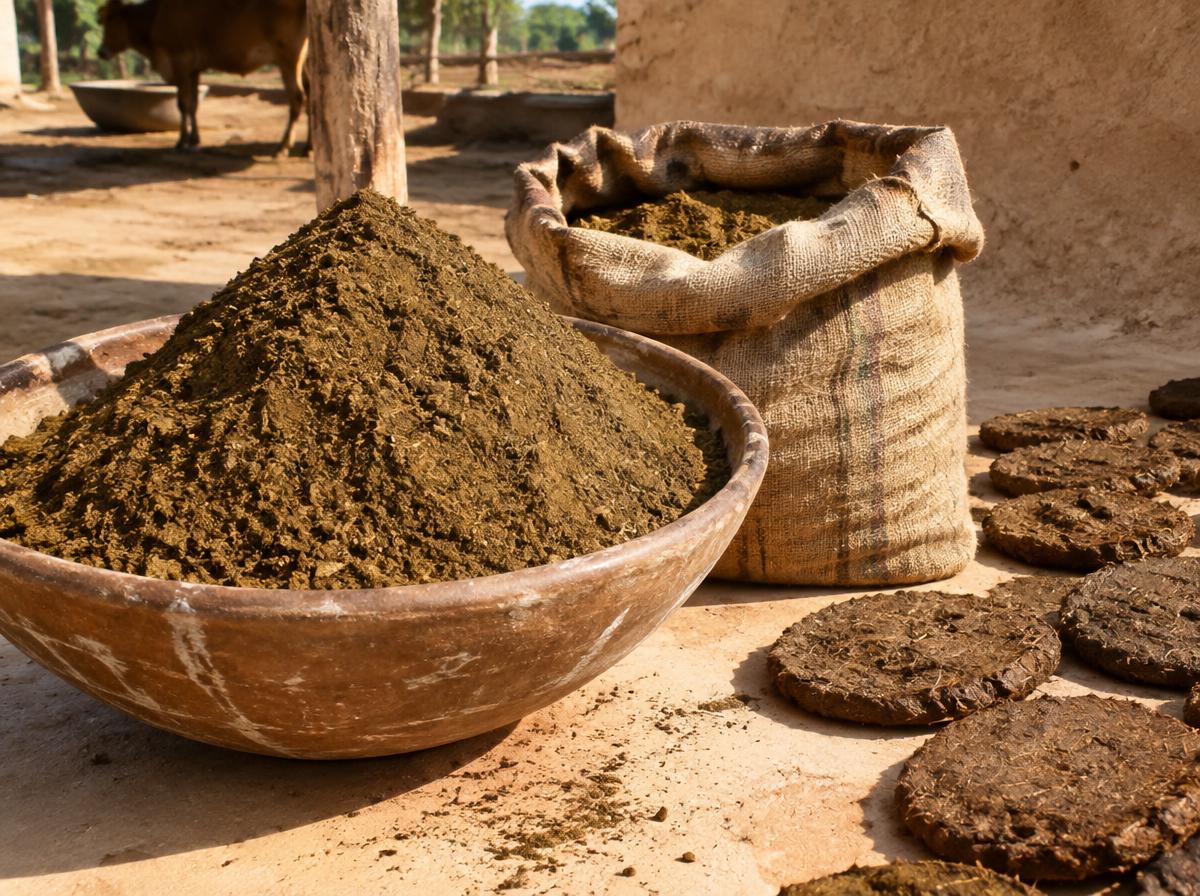
Cow dung has enriched farmland for centuries. In powdered, sun-dried form it becomes a clean, easy-to-handle natural fertilizer and soil conditioner suited to modern farming, landscaping and gardening. It is well-rotted cow dung, dried and finely milled — drying reduces odour and moisture, making it lighter, easier to store and transport, and convenient to apply evenly.
- Natural soil conditioner — improves soil texture and its ability to hold nutrients and moisture
- Encourages microbial activity — supports the beneficial organisms that keep soil fertile
- Gentle, balanced feeding — releases nutrients gradually, reducing the risk of scorching plants
- Clean and easy to handle — the dried, powdered form is far more convenient than raw dung
- Versatile — suitable for fields, gardens, nurseries and potting mixes alike
Where it is used
Cow dung powder is a dependable way to add natural matter and improve soil — valuable in arid Gulf soils and in farmland that needs rebuilding elsewhere. It is usually spread and incorporated into the topsoil before planting, or applied around the root zone of growing plants; the ideal quantity varies with crop type, soil and season, so we suggest confirming rates with a local agronomist or a soil test. We supply cow dung powder as a natural agricultural input and make no medicinal or guaranteed-yield claims — results depend on soil, crop and growing practices.
- Gulf countries — UAE, Saudi Arabia, Oman, Qatar, Kuwait and Bahrain: conditioning sandy desert soils for landscaping, greening and amenity planting, supporting date-palm cultivation and ornamental horticulture, and improving moisture-holding capacity in hot, dry climates
- Non-Gulf markets — Kenya, Tanzania, Nigeria, Ghana, Ethiopia and South Africa: an affordable base manure for smallholder and commercial farms, rebuilding tired, intensively-farmed soils and supporting vegetable and plantation crops
- Landscaping — soil preparation for parks, resorts and green spaces
- Gardening — home and community gardens
- Potting & nurseries — blended into container and seedling media
- Soil reclamation — restructuring depleted or degraded soils
Country-cow urine
Cow urine holds a long place in traditional practice — as a core ingredient in Ayurveda's panchagavya, alongside milk, curd, ghee and dung; in folk remedies across parts of India, Nepal, Myanmar and Nigeria; and in cultural rituals of purification. In agriculture it is valued as a natural pest deterrent and crop growth enhancer in eco-friendly farming, and it is used alongside cow dung to produce organic manures and liquid fertilizers. In our own production it is one of the basic inputs of the formulations, and JBE offers a distilled country-cow urine for agricultural and manufacturing applications. We present cow urine as a traditional and agricultural input and make no medicinal claims — traditional accounts of its benefits lack robust modern clinical evidence.
- Panchagavya — a core ingredient in the traditional mixture alongside milk, curd, ghee and dung
- Folk remedies — consumed or applied in parts of India, Nepal, Myanmar and Nigeria for ailments such as indigestion, fever and skin disorders
- Bio-enhancer — traditional proponents describe it as improving the absorption of other remedies, though mainstream medical science notes a lack of clinical evidence for curing major diseases
- Organic pest control — a natural pesticide and crop growth enhancer in eco-friendly farming
- Soil enrichment — used alongside cow dung to produce organic manures and liquid fertilizers
- Ritual purification — employed in Hindu and Zoroastrian rituals for spiritual cleansing
From research to field
The group’s R&D foundation from 1995 to 1999 continues through adaptation for different soil and climatic conditions.
LFOM: Liquid Fermented Organic Manure
LFOM returns nutrients to the soil inside each Integrated Circular Biogas (ICBG) project. Digestate from the project's biogas plant is fermented, quality-tested and released as liquid organic manure. It goes to the project's own Napier fodder farm and to partner farmers, which closes the Goshala → Biogas → LFOM → soil loop.
Live across ICBG projects: Kamudhi · Mayiladuthurai
Open LFOM OS (staff)Corporate enquiries