
Upstream · Midstream · Downstream · Proposed
Oil & Gas
A proposed division exploring opportunities across oil and gas exploration and production, transportation and storage, and downstream processing and distribution.

One of ten principal business divisions
Public status · 5 Oct 2026
ProposedThis division is proposed. Project locations, operating entities, reserves, licences, approvals, partners and capacities are not published or confirmed. Corporate information
Division status
Connected industry sectors
One connected value chain
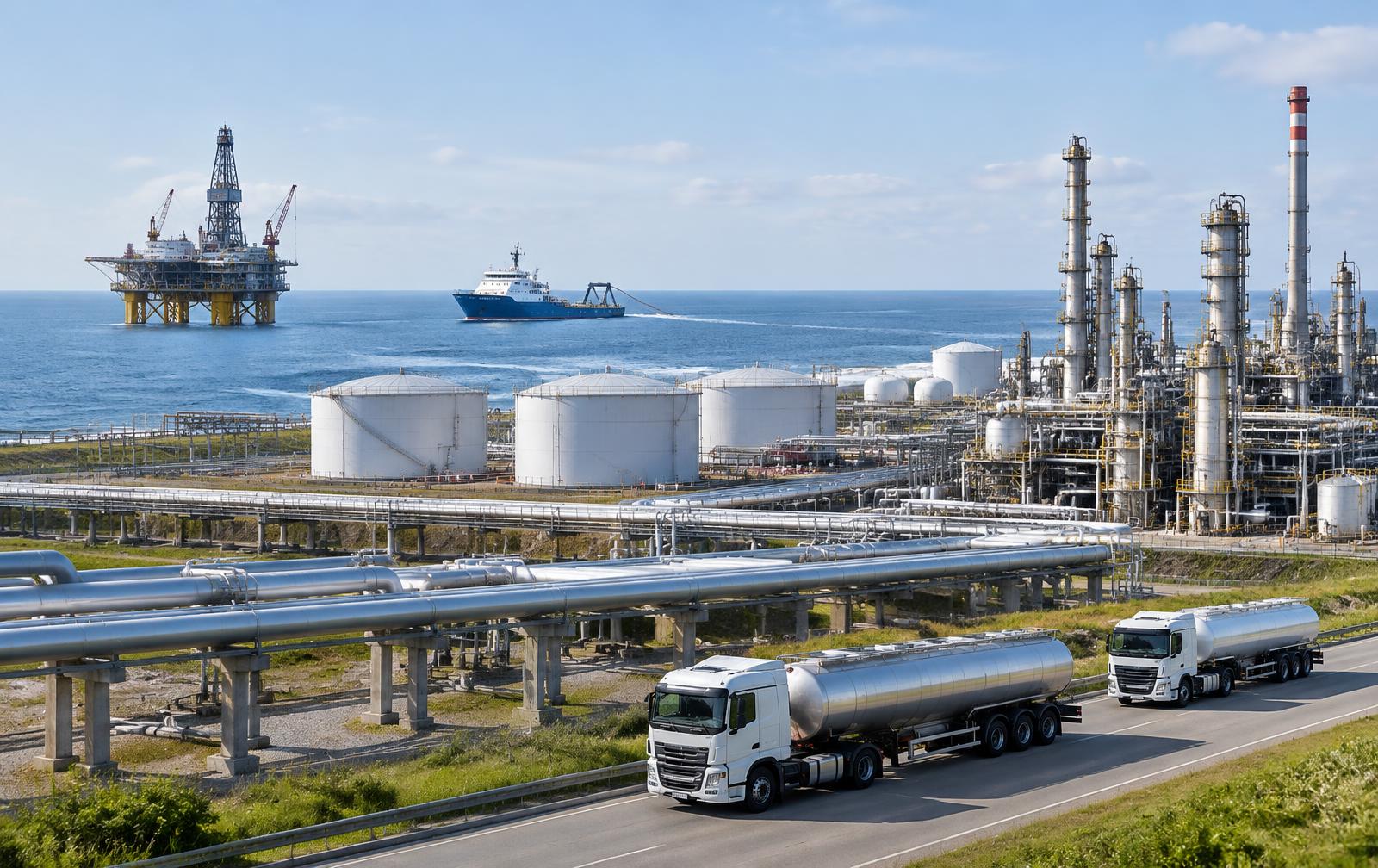
The oil and gas industry connects three core sectors. Upstream identifies and extracts raw hydrocarbons; midstream moves and stores them; downstream processes and distributes finished products. JBE is presenting this as a proposed development area for exploratory discussions, not as a claim of current operations or product availability.
Upstream — Exploration & Production
Upstream activity focuses on locating underground or underwater hydrocarbon reservoirs and extracting crude oil and natural gas. Any JBE participation would depend on project-specific technical assessment, rights, approvals, partners and investment.
- Geological and seismic assessment
- Reservoir identification and appraisal
- Drilling and well development
- Crude-oil and natural-gas extraction
Midstream — Transportation & Storage
Midstream infrastructure connects production sites with processing plants and storage terminals. The proposed scope considers the safe, regulated movement and wholesale handling of crude oil, natural gas and refined products.
- Pipelines for continuous high-volume movement
- Marine tankers for long-distance bulk transport
- Rail and road tankers for flexible movement
- Storage terminals, loading systems and wholesale handling
Downstream & Distribution
Downstream activity turns crude oil and natural gas into usable fuels, petrochemicals and other products, then moves them through terminal, marketing and distribution networks to commercial, industrial and retail users.
- Crude-oil refining and natural-gas processing
- Petrol / gasoline, diesel, jet fuel and LPG
- Petrochemical manufacturing
- Terminal storage, marketing and final delivery
Distribution channels
Distribution requirements vary by product, destination, infrastructure and applicable regulation.
- Pipelines — high-volume continuous movement of crude, refined products and natural gas
- Tanker trucks and rail — secondary distribution from bulk terminals to service stations, airports and industrial users
- Retail and commercial outlets — service stations, LPG cylinder networks and direct industrial or power-generation supply arrangements
Regulation and market context
Oil and gas distribution operates under strict environmental, safety and pricing controls. Downstream distribution also typically works with tighter margins than upstream extraction. This is general industry context, not a statement about JBE’s financial performance, licences or commercial arrangements.
Proposed-division enquiries
JBE welcomes preliminary conversations with prospective technical, logistics, infrastructure, investment and supply partners. Project locations, operating entities, reserves, licences, approvals, partners and capacities are not currently published or confirmed.
Continue exploring
Corporate enquiries